

(NEVIS MULTIFORM FOUNDATION FORMATION)
Nevis Multiform Foundation
Among offshore foundations, the Nevis Multiform Foundation stands alone: its own constitution decides which body of law will govern it. The charter records whether the entity is to be treated as an ordinary foundation, a trust, a company or a partnership, and that election can later be switched without incorporating a fresh entity or shifting a single asset. Behind that adaptability lies one of the Caribbean’s most creditor-hostile statutory regimes — foreign judgements go unrecognised, the limitation period runs only one year, fraud must be shown beyond reasonable doubt, and receivership is barred outright. We arrange Nevis foundations through licensed registered agents, from $6,500.
Core jurisdiction
Offshore Companies · Nevis Multiform Foundation
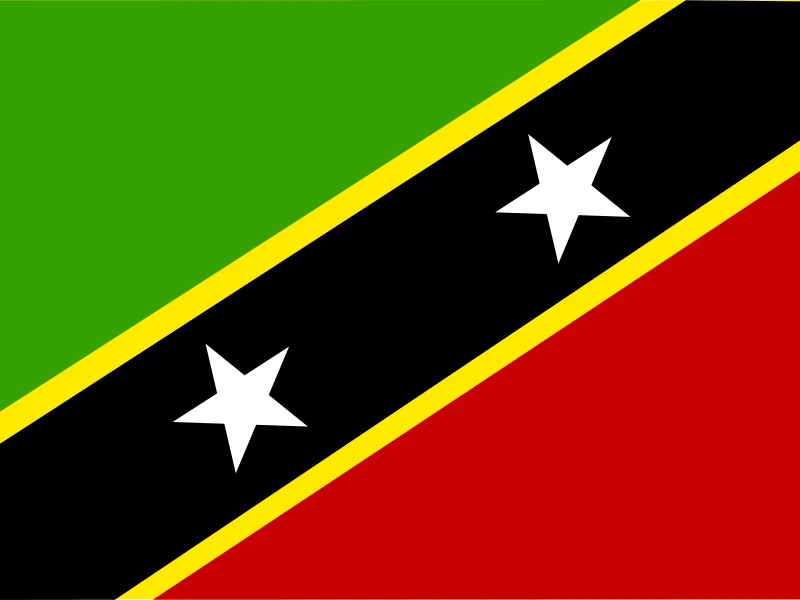
Caribbean
Saint Kitts and Nevis
Latitude
00.0000° N
Longitude
000.0000° W

(NEVIS MULTIFORM FOUNDATION OVERVIEW)
Four legal forms. Your constitution picks one.
The entity is created under the Nevis Multiform Foundation Ordinance 2004. Its ‘multiform’ label points to the feature that defines it: alone among offshore foundations, the constitution names which of four separate legal forms will govern the entity, and that form can be switched over the course of its life.Under its default Foundation Form it is a self-owning legal person — no shareholders, no owners, no trustee. Assets sit in its own name, and a management board runs it under the terms of its charter. The founder can reserve powers over that board and can name a protector to watch over it. No rule against perpetuities applies.The Ordinance draws on the broader Nevis offshore framework. A foreign judgement carries no force; a creditor has to bring an entirely new action in Nevis and establish fraudulent intent beyond reasonable doubt inside one year, and no Nevis court is permitted to place a receiver over foundation assets on the application of a founder’s creditor.
Governing law
Nevis Multiform Foundation Ordinance 2004
Legal forms
One of four, named in the constitution and switchable afterward
Burden of proof
Beyond reasonable doubt on fraudulent transfer
Limitation period
1 year from the date of the disposition
Formation time
2–3 weeks from KYC clearance
Receivership
No Nevis receiver can be appointed on a founder's creditor's application
General summary only. The Nevis Multiform Foundation is the sole offshore foundation whose constitution can elect to have it treated as a trust, a company or a partnership. Nevis and the Cook Islands are our two key jurisdictions. What suits you turns on the client, the assets and the objectives.
(WHAT IS INCLUDED)
A complete Nevis Multiform Foundation formation service
Pick a standalone Foundation, a Foundation paired with a Nevis LLC, or the full Total Protection Package
Flat, all-in pricing that already covers every Nevis government registration charge and the first-year registered agent cost — nothing hidden, no invoices you didn’t expect.
Nevis Multiform Foundation
$6,500
first-year fees all included · 2–3 weeks
A standalone Nevis Multiform Foundation in the legal form you choose. The constitution records whether it is treated as an ordinary foundation, a trust, a company or a partnership. Registered through a licensed Nevis registered agent.
Formation in the legal form you choose, as named in the constitution
Every Nevis government registration and first-year registered agent fee
Complete drafting of the foundation charter and its by-laws
Registered and operational Nevis Multiform Foundation
Foundation + Nevis LLC
$7,500
first-year fees all included · 2–3 weeks plus banking
The Nevis structure clients form most often. The foundation is the protective outer shell and governance layer; the LLC holds the bank accounts and investments, with you acting as manager for day-to-day control.
Formation in the legal form you choose, as named in the constitution
A registered, operational Nevis LLC, with the founder acting as manager
Complete drafting of the foundation charter and its by-laws
All government fees together with first-year registered agent costs
Foundation + Company + Banking
$8,500
first-year fees all included · formation timeline coordinated throughout
The full structure. A Nevis Multiform Foundation, an underlying Nevis LLC, and a bank account at one of our partner institutions — the widest structural flexibility with working banking in place from day one.
Nevis Multiform Foundation — registered and operational in full
Nevis LLC — registered and operational in full, with the founder as manager
All foundation and company formation documents
All government fees together with first-year registered agent costs
An offshore bank account at whichever partner institution you prefer
Each package covers the form elected in the constitution, a drafted foundation charter with by-laws, and hands-on coordination with licensed Nevis registered agents.
(NEVIS MULTIFORM FOUNDATION GUIDE)
Making sense of the charter, the board, and how to pick the legal form
How does a Nevis Multiform Foundation work?
A self-owning legal person with no shareholders, no owners and no trustee — able to take on the legal characteristics of up to four different structures.
The foundation is created under the Nevis Multiform Foundation Ordinance 2004. A founder signs a charter, that charter is lodged with the Nevis Registrar, and the foundation then exists as a legal person in its own right. It holds assets in its own name, enters contracts, banks, owns companies and carries on business.
Its distinguishing feature is the election of form. The foundation defaults to the Foundation Form but may elect the Trust Form, the Company Form or the Partnership Form — individually or in combination — and may add to or alter those forms later by amending the charter. With no rule against perpetuities, the foundation can carry on indefinitely.
- Charter: the registered constitutional document, setting out the elected form or forms.
- By-laws: confidential regulations holding the operational detail, not filed publicly.
- Management board: the governing body — one member minimum, with corporate members allowed.
- Protector: an optional supervisory role whose powers are set out in the charter.
We coordinate the form selection, charter drafting and registration through licensed Nevis registered agents.
Discuss your structureWhat are the four legal forms?
Foundation, Trust, Company and Partnership. The constitution states which one governs the entity, and that form stays in force until it is changed.
The Foundation Form is the default: a self-owning entity run by a management board under the charter. When the constitution says the foundation is to be treated as a trust, the board takes on trust-law fiduciary duties and beneficiaries gain equitable-style interests enforceable in the Nevis courts, all without the foundation ever acquiring a trustee.
The Company Form produces members with set governance rights comparable to shareholders, handy where several family branches each want a say. The Partnership Form produces partners holding partnership-style economic rights, which allows profit waterfalls, priority distributions and carried-interest style allocation. Only one form governs at any moment, so the election is made with care at drafting.
- Foundation Form: self-owning entity, management board, built around a purpose or beneficiaries.
- Trust Form: fiduciary duties and equitable-style beneficiary interests.
- Company Form: members, voting rights, and a member register.
- Partnership Form: partners with defined economic allocation rights.
The elected form sets the governance framework and the home-country tax analysis that comes with it.
Speak to a specialistCan the foundation change form later?
Yes. The form named in the constitution can be altered at any stage of the foundation's life by amending the charter, as family, asset, tax, regulatory and commercial circumstances shift.
Transformation calls for no new entity, no dissolution and no transfer of assets. The charter is amended following its own amendment clauses, and the foundation carries on as the same registered entity throughout. This is the multiform idea in practice: the form is a choice, never a permanent constraint.
A common trajectory: a founder starts in Foundation Form for asset protection during the working years; shifts to the Trust Form as estate planning moves to the fore, handing the next generation enforceable interests; then shifts to the Company Form as those beneficiaries come of age and want a governance role. One entity, three purposes over its lifetime, and no restructuring. The foundation is adapted, not replaced.
- One form at a time: the constitution names the governing form; a change substitutes a new one.
- No new entity: the foundation retains its registration and its original formation date.
- No asset transfer: assets never move, so no fresh limitation period begins.
- Prior rights preserved: rights and liabilities that arose under an earlier form remain intact.
- Not a creditor opening: a change of form is a governance act, not a disposition of assets.
We draft charters with transformation in view, so the structure can evolve without being redrafted.
Discuss transformationHow strong is the Nevis asset protection?
Foreign judgements carry no force, the standard of proof is criminal, the limitation period is one year, and no receiver may be appointed.
A creditor holding a foreign judgement has no way to enforce it against a Nevis Multiform Foundation. New proceedings have to be started in Nevis, under Nevis law. Within them the creditor must establish an intent to defraud that particular creditor beyond reasonable doubt — the criminal standard brought into a civil claim.
The limitation period runs one year from the date of the disposition, or three years from when the cause of action arose where the creditor was unaware at the time. The Ordinance also expressly forbids any Nevis court from placing a receiver over foundation assets on the application of a founder's creditor, closing the usual interim freezing route.
- No foreign judgement recognition: the creditor begins again in Nevis, and at their own expense.
- Beyond reasonable doubt: the criminal standard, brought to bear on a civil fraudulent transfer claim.
- One year: a short limitation window judged against any international benchmark.
- No receivership: a statutory bar you will not find in every jurisdiction.
We are candid about where Nevis is at its strongest and where the Cook Islands Trust is the better answer.
Compare the optionsWho runs the foundation, and what happens when the founder dies?
A management board runs it under the charter. The founder may serve on that board, reserve powers over it, and shape exactly how it is succeeded.
The management board plays the part of a board of directors, charged with administering assets, making distributions and carrying out the foundation's objects. At least one member is required, and corporate members are allowed. A protector may be brought in to oversee the board, sign off on categories of decision, or give effect to the founder's intentions.
The Ordinance lets the founder serve on the board and hold reserved powers — amending the charter, appointing and removing members, issuing binding directions — without those powers turning the foundation's assets into the founder's own property. On death, governance passes as the charter directs. There is no probate, no estate administration, and no forced heirship claim against foundation assets.
- Management board: governs under the charter; corporate members permitted.
- Protector: optional oversight, carrying powers of appointment, approval or enforcement.
- Reserved powers: expressly allowed by statute, unlike a settlor's retained powers in a trust.
- Succession: written into the charter; the entity continues without any interruption.
Succession mechanics are drafted around your family rather than copied from a template.
Discuss governanceWhat is the foundation able to hold, and how is it funded?
Any asset class. Most structures rely on an underlying Nevis LLC as the operating and banking layer.
Cash, deposits, investment portfolios, business interests, intellectual property, precious metals and digital assets can all be held. Assets sit in the foundation's own name rather than with a trustee. Real property is held through an underlying company instead of directly, because land is always governed by the law of the place where it sits.
The standard build is foundation over LLC: the foundation owns the LLC, the LLC holds the bank and brokerage accounts, and the founder is the manager. That pairing also layers in Nevis's LLC-specific protections — the three-year non-renewable charging order and the mandatory $100,000 creditor bond — beneath the foundation's own barriers.
- Cash and securities: wired, or transferred in specie, to the foundation or to its LLC.
- Business interests: shares, membership interests, and partnership interests.
- Real estate: held through the underlying LLC rather than by the foundation itself.
- Account opening: four to eight weeks, so it proceeds alongside formation.
We handle the banking introduction and the sequencing of transfers as part of the engagement.
Discuss fundingIs it legal, and what has to be reported?
Fully legal. How your home jurisdiction classifies it drives every filing that follows, so that is settled before the charter is completed.
A Nevis Multiform Foundation is a lawful structure. It is not a device for cutting tax. For US founders the foundation may be classified as a foreign trust, a foreign corporation, or another entity type — and the elected form has a material bearing on that analysis. The Partnership Form in particular raises tax-transparency questions that call for specialist advice before it is elected.
The filings that follow from classification may take in Form 3520, Form 5471, or others. CRS reporting attaches at the account level wherever the foundation banks in a participating country. We build every structure so that it can be reported correctly, and we can introduce qualified international tax advisers from our network.
- Form drives classification: the elected form shifts the home-country tax analysis.
- US founders: Form 3520, Form 5471, or other filings, depending on classification.
- Partnership Form: tax-transparency treatment differs; specialist advice is indispensable.
- CRS: account-level reporting wherever the foundation banks.
We do not enable tax evasion. Every structure we form is built to be reported.
Discuss complianceWho is a Nevis Multiform Foundation for?
Clients whose main driver is structural flexibility rather than a court-tested adversarial record.
The multiform capability has no equal anywhere. Where what the structure genuinely needs is trust-like beneficiary protection, corporate voting, or partnership economics, Nevis is the only jurisdiction that will write that treatment into a foundation constitution. Multi-branch families, commercial joint ventures and investment vehicles are the usual candidates.
It also suits civil law founders who already recognise the foundation form, and clients weighing cost — the Nevis foundation is typically cheaper to set up and run than a Cook Islands Trust, and forms faster.
- Governance flexibility: structures that need a legal character beyond a plain foundation.
- Multi-principal arrangements: family branches, or joint venture parties, holding defined rights.
- Civil law founders: European, Latin American and Asian clients at home with foundations.
- Speed and cost: faster and generally cheaper than the Cook Islands equivalents.
Where the priority is a tested US adversarial record, we recommend the Cook Islands Trust and say as much.
Book a consultation(WHY CLIENTS CHOOSE OFFSHORE COMPANIES ONLINE)
Nevis foundation formation, through licensed registered agents
We run Nevis Multiform Foundations, LLCs, IBCs and Trusts as one coordinated engagement, drawing on direct relationships throughout the Caribbean and the Pacific.
Direct Nevis registered agent relationships
Standing relationships with licensed Nevis registered agents mean quicker processing, keener pricing, and advice rooted in the jurisdiction rather than passed along through it.
All Nevis structures in one engagement
Multiform Foundation, LLC, IBC and Nevis Trust coordinated as one, so the layers are engineered as a single structure instead of being bolted together piece by piece.
Form selection advice, not form filling
We advise on which of the four legal forms genuinely fits your objectives. Only one is in force at a time, so getting it right from the start matters.
Fixed or quoted fees from $6,500
Every Nevis government registration and first-year registered agent cost is built into the quoted price — nothing hidden, no invoices you didn't expect.
Honest jurisdiction recommendations
Where the Cook Islands Trust is the stronger answer for your risk profile, we say so. The recommendation follows your objectives, not our fee schedule.
The multiform advantage
One entity. Four legal forms to pick from.
The Nevis Multiform Foundation is the only offshore foundation anywhere that lets the founder decide which body of law governs the entity. A Nevis foundation holds one form at a time: the constitution states whether it is to be treated as an ordinary foundation, a trust, a company or a partnership, and the entity is run on that footing. That form can be changed later by amending the charter, without dissolving the foundation or moving a single asset. This one-of-a-kind feature lets the foundation be adapted across its lifetime, giving clients a highly flexible planning vehicle able to evolve as family, asset, tax, regulatory and commercial circumstances change.
Choose a form below to see what each one means in practice.
Select the form stated in the constitution
The constitution will state the foundation is
to be treated as an ordinary foundation
Only one form is in force at any given time. The advantage lies in choosing the form at the outset and being able to change it later without setting up a new entity.
Foundation Form
The default form, in force unless the constitution says otherwise. The foundation owns itself: no shareholders, no members, no partners, no trustee. It holds assets in its own name, contracts, banks and owns companies. A management board administers it under the registered charter, with confidential by-laws holding the operational detail. The founder may reserve powers over the board without those powers turning the assets into his own.
Trust Form
Where the constitution says the foundation is to be treated as a trust, the entity is run on trust-law principles while staying a registered, self-owning foundation. It does not take on a trustee. The management board assumes fiduciary duties toward the beneficiaries, and the beneficiaries hold equitable-style interests enforceable against the board in the Nevis courts. The familiar trust-enforcement framework, applied to a registered legal person.
Company Form
Where the constitution says the foundation is to be treated as a company, members are created holding the rights the charter specifies: voting on major decisions, taking distributions, information rights, or something narrower. The members do not own the foundation. It stays self-owning, and they hold defined rights within it. Different family branches can be handed different membership classes carrying different voting weights, giving familiar company mechanics inside the foundation framework.
Partnership Form
Where the constitution says the foundation is to be treated as a partnership, partners are created holding partnership-style economic rights: a share in the foundation's income and gains as the charter sets out. This supports profit waterfalls, priority distributions and carried-interest style arrangements that fund and private equity practitioners will recognise, without setting up a conventional partnership. Tax-transparency treatment differs by home jurisdiction, so specialist international tax advice is indispensable before this form is chosen.
A change of form is carried out by amending the charter. It leaves registration, earlier transfers, and the Ordinance’s creditor protections untouched.
Discuss the right form
Stage 01
Transfer of ownership
The foundation owns the assets outright
Assets transferred into the foundation are held in its own name. No trustee holds them for you, and no membership interest is registered against you. They form no part of your personal estate.
Protective effectA creditor coming after you personally is chasing assets you no longer own.
Stage 02
No foreign judgement recognition
A foreign judgement carries no force in Nevis
A US, UK, or other foreign judgement cannot simply be laid before a Nevis court and enforced against foundation assets. The creditor has to start entirely new proceedings in Nevis, under Nevis law.
Protective effectYears of litigation abroad yield a judgement that halts at the jurisdictional line.
Stage 03
Burden of proof
Beyond reasonable doubt, on a civil claim
To have a transfer set aside as fraudulent, the creditor must establish an intent to defraud that particular creditor beyond reasonable doubt — the criminal standard, applied to a civil proceeding.
Protective effectMost fraudulent transfer claims turn on the balance of probabilities. This one does not.
Stage 04
Limitation period
One year from the date of the disposition
Claims have to be brought within one year of the transfer, or three years from when the cause of action arose where the creditor was unaware at the time. Short by any international measure.
Protective effectOnce that window shuts, the transfer is beyond challenge regardless of intent.
Stage 05
No receivership
No Nevis receiver over foundation assets
The Ordinance expressly states that no Nevis court may place a receiver over foundation assets on the application of a founder's creditor — a specific statutory bar, not a question of judicial discretion.
Protective effectThe usual interim tactic of freezing assets pending trial is shut off at the level of the statute.
Stage 06
LLC layering
The underlying Nevis LLC brings barriers of its own
Where the foundation owns a Nevis LLC, a creditor also runs into the LLC statute: a three-year non-renewable charging order as the only remedy, and a mandatory $100,000 bond before any claim can even be filed.
Protective effectTwo independent statutory regimes have to be beaten, not one.
(WHO SHOULD FORM A NEVIS MULTIFORM FOUNDATION?)
A natural choice wherever structural adaptability is the main objective
The Nevis foundation fits multi-branch families, commercial joint ventures, investment vehicles, and civil law founders who need a legal character beyond a plain foundation. Where what you really want is a four-decade adversarial record before the US courts, we will tell you so and point you to the Cook Islands Trust instead.
Structural flexibility no other jurisdiction offers
No other offshore foundation lets the founder decide which body of law governs the entity. Where trust mechanics, corporate voting, or partnership economics are what the structure genuinely needs, Nevis is the only jurisdiction that will set it down in a foundation charter.
Families spanning several branches that want differentiated governance and voting rights
Commercial joint ventures needing partnership economics inside a protected entity
Investment structures built on profit waterfalls and priority distribution mechanics
Civil law founders from Europe, Latin America and Asia already at home with foundations
Clients who want the form to shift over time without setting up a new entity
Where the court-tested record matters most
We are candid about this. The Nevis Ordinance is strong on paper but has not been tested in US adversarial proceedings to the degree the Cook Islands Trust has.
US clients whose single priority is a forty-year adversarial court record
Situations where the Nevis LLC bond and charging order on their own are the better fit
Structures that need anti-duress provisions directing an independent trustee
Cases where speed and cost are not the deciding factors
The most robust Nevis arrangement places the foundation over a Nevis LLC. Where a court-tested track record matters most, weigh the Cook Islands Trust, or see the Total Protection Package.

(TOTAL PROTECTION PACKAGE)
The Nevis Total Protection Package
A charter by itself achieves nothing. The structure only starts working once assets move in and a bank account is live. We handle the banking introduction, aligning your entity profile with institutions that are actively onboarding Nevis entities. Because opening an account usually runs four to eight weeks, it proceeds in parallel with formation rather than afterward.
- Nevis registered agent application handled end to end
- Registered agent, registration and third-party charges set out line by line in the written quote
- Foundation charter and confidential by-laws drafted around the form or forms you elect
- An underlying Nevis LLC set up as the operating and banking layer, with the founder as manager
- Structure registered and ready to take in assets from the first day
(NEVIS FOUNDATION EXPERTISE)
Meet our foundation specialists

John Evans
Forbes Business Council Founder & Chief Executive Officer
Rarotonga, Cook Islands
More than two decades of experience across offshore banking, asset protection, international companies and trusts.
Melanie Tetuaiteroi
Sales Assistant
Rarotonga, Cook Islands
Supports client onboarding, communications, documentation and operational coordination, backed by fiduciary administration experience.
(FORMATION PROCESS)
01
Consult on structure and form
We talk through your goals and recommend which of the four legal forms your constitution ought to state. Only one is ever in force at once, so settling the form correctly at the outset shapes everything downstream.
02
Confirm structure and complete KYC
We settle the foundation name and board make-up, decide whether an underlying Nevis LLC is called for, and then hand you a tailored KYC checklist — certified passport, proof of address and source of funds.
03
Draft the charter and by-laws
Working with you and the Nevis registered agent, we draft the charter — the elected form, the governance clauses, beneficiaries or purposes, board composition, protector powers, and any reserved founder powers.
04
Register and open banking
The charter is signed and lodged with the Nevis Registrar, any underlying LLC is set up, and we carry the banking introduction through to a live, funded account.
(NEVIS FOUNDATION INSIGHTS)
Nevis Multiform Foundation Insights
Recent Articles
Explore our latest insights, practical guides and updates on international wealth structuring.
Offshore Asset Protection5 min read
When a Cook Islands Trust Will Not Protect Your Assets

Offshore Companies5 min read
Offshore Company Annual Maintenance Requirements

International Banking & Investment4 min read
Bank vs EMI for an Offshore Company

Asset Protection4 min read
When Is It Too Late for Asset Protection?

Offshore Companies4 min read
Best Offshore Company for Consultants and Agencies

Offshore Foundations4 min read
Offshore Foundation vs Offshore Trust
Asset Protection4 min read
LLC vs Trust for Asset Protection

Offshore Asset Protection5 min read
What Assets Can a Cook Islands Trust Own?
(ABOUT NEVIS MULTIFORM FOUNDATIONS)
What is a Nevis Multiform Foundation?
A Nevis Multiform Foundation is a self-owning legal person created under the Nevis Multiform Foundation Ordinance 2004. It carries no shareholders, no owners and no trustee. It holds assets in its own name, possesses its own legal personality, and is run by a management board following a charter lodged with the Nevis Registrar. Confidential by-laws hold the operational detail and are not filed publicly.
The ‘multiform’ element is the whole reason the structure exists. Its constitution declares the body of law that governs it: whether the entity is to be treated as an ordinary foundation, a trust, a company or a partnership. Only one form is live at a time. The Foundation Form is the default self-owning entity. When the constitution says the foundation is to be treated as a trust, the management board picks up trust-law fiduciary duties and beneficiaries gain equitable-style interests that the Nevis courts will enforce — all without the foundation ever acquiring a trustee. The Company Form produces members with set governance and voting rights. The Partnership Form produces partners with partnership-style economic allocation. Nowhere else offshore can a founder make that election inside a foundation charter.
Changing form is done by amending the charter. Nothing new is created — no dissolution, no re-registration, no moving of assets. The foundation carries on as the very same registered person throughout, so a change of form neither restarts any limitation period nor hands a creditor any argument that assets were shifted. A founder can begin in Foundation Form for protection through the working years, switch to the Trust Form once estate planning takes priority, and switch again to the Company Form as the next generation looks for a governance role. At every stage the form is a chosen setting rather than a fixed constraint.
The asset protection rules rest on the same statutory footing as the rest of the Nevis offshore framework. Judgements from foreign courts cannot be enforced. A creditor has to open wholly new proceedings in Nevis, under Nevis law, and establish an intent to defraud that particular creditor beyond reasonable doubt — the criminal standard imported into a civil claim. The limitation period is one year from the date of the disposition, or three years from when the cause of action arose in cases where the creditor did not know at the time. The Ordinance further forbids any Nevis court from placing a receiver over foundation assets at the instance of a founder’s creditor, shutting down the interim freezing route creditors usually try first.
The founder is free to serve on the management board and to reserve powers over it — amending the charter, appointing and removing members, issuing binding directions — without those powers turning the assets into the founder’s own property. That is a distinctly stronger footing than a trust settlor who keeps equivalent powers, where retained control is a familiar weakness creditors are coached to exploit.
Most structures combine the foundation with a Nevis LLC. The foundation owns the LLC, the LLC holds the bank and brokerage accounts, and the founder acts as manager for everyday control. That pairing layers two separate statutory regimes on top of each other: the Ordinance’s barriers at the foundation level, and, at the member level, the LLC statute’s three-year non-renewable charging order together with its mandatory $100,000 creditor bond.
Here is the honest comparison with the Cook Islands Trust. The Cook Islands Trust brings forty years of adversarial testing, including against US federal agencies, and stays the benchmark wherever proven certainty against US judgment creditors is the sole aim. The Nevis Multiform Foundation offers strong statutory protection but a thinner adversarial record. Where the governing legal form is what matters — or where multi-principal structuring, civil law familiarity, formation speed, or cost drive the decision — Nevis is the stronger answer. We put both in front of every client and advise on objectives, not on our fees.
(NEVIS FOUNDATION QUESTIONS)
Common questions about Nevis Multiform Foundations
(CONTACT US)
Speak to a specialist. Let’s build your structure.
Book a confidential, no-obligation consultation with a senior member of our team to discuss your objectives and the services we have available.