

(COOK ISLANDS LLC, IBC & PTC FORMATION)
Cook Islands Company
A Cook Islands company — whether an LLC, an IBC, or a PTC — is the corporate vehicle that operates inside the world’s strongest asset protection framework. Its LLC carries a five-year non-renewable charging order, and when a Cook Islands Trust sits above it as the owning structure the result is double-lock protection: two independent jurisdictions and two independent legal barriers. We coordinate direct, on-the-ground relationships with Cook Islands service providers, formation inside one to three days, and optional banking or trust pairing, from $2,000.
Core jurisdiction
Offshore Companies · Cook Islands Company
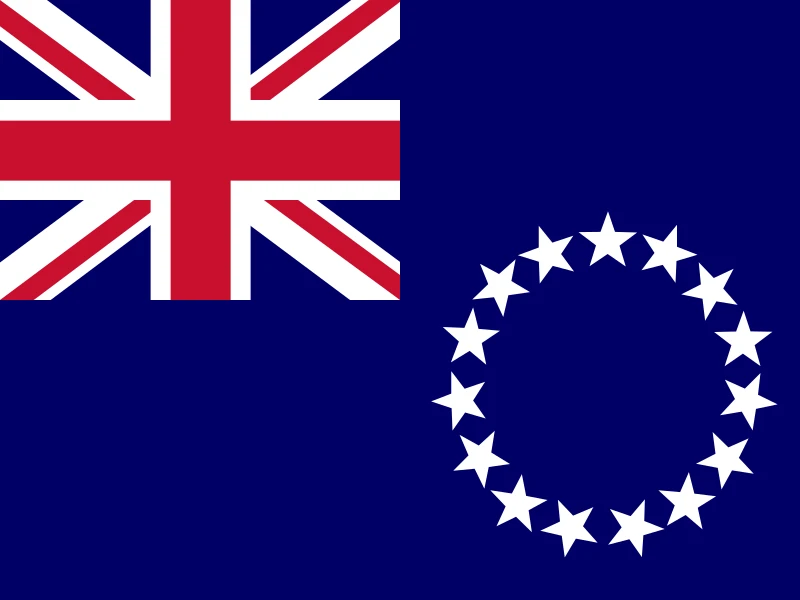
Asia Pacific
Cook Islands
Latitude
00.0000° S
Longitude
000.0000° W

(COOK ISLANDS COMPANY OVERVIEW)
A fast, fixed-fee company structure for offshore asset protection
Three separate company structures are available in the Cook Islands — the LLC, the IBC, and the Private Trust Company — and each plays a different role within an offshore structure. The LLC is the one clients use most often, and the offshore company we form most frequently.A Cook Islands LLC is created under the Limited Liability Companies Act 2008. Its protective design borrowed in part from Nevis — commonly rated the world’s strongest LLC creditor protection statute — and was then fitted into the Cook Islands’ own well-established legal system.The Cook Islands LLC reaches its full strength when it is owned by a Cook Islands Trust as the holding structure — the stage-by-stage breakdown of double-lock protection is set out below.
Governing law
Limited Liability Companies Act 2008, as amended
Entity types
LLC, IBC, or Private Trust Company (PTC)
Charging order
5 years, non-renewable — the only creditor remedy
Formation time
5–10 business days once KYC is cleared
Single-member LLCs
Explicitly permitted by statute
Best paired with
A Cook Islands Trust, for double-lock protection
General summary only. The Cook Islands LLC is the standard holding vehicle for the world's strongest asset protection structure. The Cook Islands and Nevis are our two key jurisdictions. What suits you turns on the client, the assets and the objectives.
(WHAT IS INCLUDED)
A complete formation service for Cook Islands companies
Take a standalone LLC or IBC, an LLC or IBC with banking, or the complete Total Protection Package
Flat, all-in fees covering every government registration charge and the first-year registered agent cost — nothing hidden, no invoices you didn’t expect.
Cook Islands LLC or IBC
$2,000
first-year fees all included · 1–3 days
A Cook Islands LLC or IBC — the standard holding vehicle used inside a Cook Islands Trust asset protection structure, or a conventional share company for international trading. We settle the right entity type during your consultation.
Certificate of formation or incorporation, plus the Operating Agreement or M&A
Every Cook Islands government registration fee
First-year Cook Islands registered agent
Apostilled corporate documents
LLC or IBC + Banking
$3,000
first-year fees all included · 1–3 days plus 4–10 weeks banking
A Cook Islands LLC or IBC bundled with an account at one of our partner institutions — offshore banks, private banks, Swiss banks, investment custodians, and cryptocurrency and EMI banking partners.
Cook Islands LLC or IBC — registered and operational in full
An offshore bank account at whichever partner institution you prefer
All company documents
All government fees plus first-year agent costs
Trust + Company + Banking
$12,000
first-year fees all included · formation timeline coordinated throughout
The full structure. A Cook Islands or Nevis Trust, a Cook Islands or Nevis Company (LLC or IBC), and a bank account — the strongest asset protection combination on offer, built on our two core jurisdictions.
Cook Islands or Nevis Trust — registered and operational in full
Cook Islands or Nevis Company (LLC or IBC) — registered and operational in full
Every trust and company formation document
All government fees plus first-year trustee and agent costs
An offshore bank account at whichever partner institution you prefer
Each package covers drafted formation documents, apostilled copies, and hands-on coordination with licensed Cook Islands service providers.
(COOK ISLANDS COMPANY GUIDE)
Making sense of the Cook Islands LLC, IBC and PTC
How does a Cook Islands LLC or IBC work?
A Cook Islands LLC keeps legal ownership of company assets separate from the members who own it; a Cook Islands IBC achieves the same through a conventional share structure.
The LLC is created under the Limited Liability Companies Act 2008 and owned by one or more members, who can either run the company themselves or appoint a manager for day-to-day operations. It expressly allows single-member LLCs, and the Operating Agreement records the membership interests, management authority and distribution rules.
The IBC is created under the International Companies Act 1981-82 and owned by shareholders who appoint directors to run it — a resident secretary who is an officer of a licensed Cook Islands trustee company is required, though no resident director is needed. Both structures are registered through licensed Cook Islands service providers and can hold bank accounts and investments directly.
- Members or shareholders: own the company and hold its economic and voting rights.
- Manager or directors: handle everyday banking, investment and operational decisions.
- Resident secretary (IBC only): must be an officer of a licensed Cook Islands trustee company.
- Operating Agreement or M&A: sets out governance, distributions, and member or shareholder rights.
We coordinate the entity selection, the service provider relationships, the due diligence and the formation.
Discuss your structureWho controls a Cook Islands LLC?
A Cook Islands LLC can be arranged so that you keep direct, practical control as manager under normal circumstances.
Most Cook Islands LLCs used inside a trust structure are member-managed, or have the settlor appointed as manager, which means everyday banking, investment and operating decisions stay in your hands exactly as they would with any company you run yourself.
What a Cook Islands Trust above the LLC changes is not day-to-day control — it is who legally holds the membership interest a creditor would need to reach. That distinction is the whole basis of the double-lock combination described in the next tab.
- Manager authority: covers routine banking, investment and operational decisions.
- Member rights: cover distributions, voting, and amendments to the Operating Agreement.
- Trustee intervention: only comes into play if a genuine legal threat arises, where a trust sits above the LLC.
- Continuity planning: the Operating Agreement can set out succession and emergency authority in advance.
What can be held in a Cook Islands LLC?
A company becomes operational once accepted assets are properly transferred and recorded as its property.
Common holdings include cash and bank deposits, investment portfolios, cryptocurrency, precious metals and business interests. We coordinate the bank or custodian introduction, and every institution reviews the proposed assets, source of funds and supporting documentation before an account is opened.
US real estate generally cannot be shifted offshore in the conventional sense, since property stays subject to the law of the place where it sits. The structure works most cleanly for liquid financial assets held in offshore accounts in the company's own name.
- Cash and deposits: held through approved offshore banking arrangements.
- Investment portfolios: transferred in-kind, or accepted by the bank or custodian.
- Cryptocurrency: held through institutions that actively support digital asset custody.
- Business interests: brought together under a single company ownership layer.
Why pair a Cook Islands LLC with a trust?
The short answer is control: you keep it day to day, while the structure itself is built to change hands only when it is genuinely put to the test.
When a Cook Islands Trust owns the LLC rather than you personally, the membership interest a creditor would need to reach rests with an independent, licensed trustee operating wholly outside US jurisdiction. Nothing changes about how you manage the LLC in ordinary circumstances — you carry on as manager, making banking and investment decisions just as before.
What changes is what happens under real legal pressure. The trust deed's anti-duress clause directs the trustee to decline any instruction given under compulsion, including one from you if a US court has ordered you to direct a distribution. This is why the combination is called double-lock protection: two independent legal barriers working in tandem, both administered within the same jurisdiction and often by the same licensed trustee.
- Practical control preserved: day-to-day management carries on exactly as it did before formation.
- Membership interest relocated: held by an independent, licensed trustee rather than by you personally.
- Anti-duress protection: the trustee is bound to turn down instructions given under legal compulsion.
- Same-jurisdiction cohesion: trust and LLC administered under one legal framework, often one trustee.
We form Cook Islands LLCs and Trusts together as a single, coordinated engagement.
See the Total Protection PackageWhat are the limits of Cook Islands company protection?
A Cook Islands LLC or IBC is a proactive planning structure, not a way to hide assets or sidestep obligations you already have.
Transfers made after a claim has already arisen, while the settlor is insolvent, or for an improper purpose can still be challenged. The registered agent and any bank will also insist on full disclosure of the people, assets and source of funds behind the structure — it is not anonymous.
A standalone LLC's five-year charging order is a real but limited protection — pairing it with a Cook Islands Trust strengthens the position materially by moving the membership interest beyond direct US creditor enforcement.
- No retroactive protection: existing or foreseeable disputes call for immediate legal advice, not a same-week transfer.
- No secrecy from authorities: US tax and reporting duties carry on in full whatever the structure.
- No guaranteed outcome: the facts, the timing and the applicable law stay decisive in any dispute.
- No substitute for compliance: the structure works alongside correct filings, not in place of them.
When should a Cook Islands company be set up?
The strongest planning is done while finances are stable and before any specific dispute or claim exists.
Formation itself is quick — usually one to three days once KYC is cleared — but the protective value of the structure rests on setting it up well ahead of any pressure, not in reaction to an active threat.
Opening an offshore bank account generally takes a further four to ten weeks, and a combined LLC + Trust structure usually runs five to twelve weeks from consultation to a fully funded, operational structure.
- Plan before pressure: do not wait until a transfer becomes urgent or contested.
- Prepare documentation early: certified passport, proof of address and source-of-funds evidence should be current.
- Coordinate funding: decide which assets will move before formation is finalised.
- Review existing obligations: creditors, guarantees and disputes must be disclosed to the trustee or agent.
What tax and reporting obligations apply?
Offshore does not mean unreported. What is owed depends on the members, the assets and the countries involved.
Cook Islands service providers and any bank or custodian carry out KYC and beneficial-ownership checks as a matter of course. Home-country tax, foreign-entity, foreign-account and asset-reporting rules keep applying wherever the company is formed.
US persons typically file Form 5471 each year for the company and an FBAR for offshore accounts, along with Form 8938 under FATCA where it applies, and CFC rules may reach certain types of income. These obligations are non-negotiable, and every structure we form is built for full home-country compliance from day one.
- Form 5471: yearly US reporting for foreign corporations and certain LLCs.
- FBAR: applies to offshore bank and financial accounts held by the company.
- Form 8938: may apply under FATCA depending on account values and filing status.
- Professional advice: should be obtained before formation and before any assets are funded.
Who might consider a Cook Islands company?
The structure is usually considered by people setting up a Cook Islands Trust, and by those looking for offshore banking access.
The overwhelming majority of Cook Islands LLC formations form part of a Cook Islands Trust structure — the LLC is the operating layer, holding bank accounts and running investments. People seeking offshore banking access that has grown hard to obtain directly since FATCA are also strong candidates.
It is a poorer fit where the asset base is modest, the purpose is short term, or the client is unwilling to complete the disclosure a licensed service provider and bank will require as standard practice.
- Clients establishing a trust: the LLC is the operating layer inside a Cook Islands Trust structure.
- Individuals accessing offshore banking: the company provides the structural route in the post-FATCA landscape.
- Families wanting a PTC: direct multi-generational governance run through a Private Trust Company.
- Clients seeking Total Protection: through a combined trust, company and banking structure.
We weigh your objectives, assets and timing before recommending an LLC, IBC, PTC, or a paired structure.
Book a consultation(WHY CLIENTS CHOOSE OFFSHORE COMPANIES ONLINE)
Cook Islands company formation, handled on the ground in Rarotonga
We coordinate Cook Islands LLCs, IBCs, PTCs and Cook Islands Trusts as one engagement. Our team sits in Rarotonga — this is not a remote referral service.
Based in Rarotonga, on the ground
Our team is based in Rarotonga — on the ground in the world's most developed offshore jurisdiction, not a remote referral service.
Direct service provider relationships
Direct working relationships with Cook Islands company service providers mean quicker processing, keener pricing, and advice rooted in genuine local knowledge.
LLC, IBC and PTC specialists
First-hand jurisdictional knowledge across all three Cook Islands company structures, not generic offshore formation scripts.
Fixed-fee formation
All government fees plus first-year agent costs are built into the price — nothing hidden, no invoices you didn't expect.
Full compliance from day one
Optional legal and tax advisory keeps you in full home-country compliance — every structure is built to be reported correctly, not concealed.
Stage 01
Standalone operation
Day-to-day control as LLC manager
The LLC can be set up as member-managed, giving you direct control as sole member, or manager-managed with you as manager for routine banking and investment decisions.
Protective effectOwnership and day-to-day management stay workable right up until the structure is ever tested.
Stage 02
Charging order limitation
A five-year, non-renewable remedy only
A creditor who wins a judgment has just one remedy: a charging order over the membership interest, with no power to force distributions or wind up the LLC.
Protective effectIf the LLC holds on to its earnings, the creditor gets nothing — and the order expires after five years.
Stage 03
Trust ownership
The membership interest rests with the trustee
When a Cook Islands Trust owns the LLC, the membership interest — the target of any charging order — is held by the trustee, not by you personally.
Protective effectA charging order cannot reach a membership interest that is held in trust.
Stage 04
Anti-duress protection
The trustee turns down instructions given under compulsion
The trust deed carries an anti-duress clause directing the trustee to refuse any instruction given under legal compulsion — including from you, if you are compelled by a foreign court.
Protective effectThe trustee cannot be forced by a US court to make distributions or give up control.
Stage 05
Jurisdictional separation
Foreign judgments are not enforced automatically
A judgment obtained elsewhere does not automatically transfer control of the LLC or trust assets — enforcement has to be assessed afresh under Cook Islands law.
Protective effectA claimant has to relitigate the matter in the Cook Islands, under Cook Islands law.
Stage 06
Ongoing integrity
Proper administration preserves the protection
The structure should be funded proactively, run independently, and backed by proper records and reporting — not thrown together reactively once a claim has arisen.
Protective effectThe strongest position comes from early planning and disciplined administration, well ahead of any dispute.
(WHO SHOULD FORM A COOK ISLANDS COMPANY?)
A natural fit for trust structures, banking access, and international business
A Cook Islands company suits clients setting up a Cook Islands Trust, people who need offshore banking access, and owners of international businesses. For the deepest protection, put the LLC beneath a Cook Islands Trust as the owning structure.
Trust structures, banking access, and international business
A Cook Islands company is most compelling for clients setting up a Cook Islands Trust, and for those who need offshore banking access.
Clients setting up a Cook Islands Trust — the LLC is the operating layer
Individuals needing offshore banking access that is hard for individuals to get post-FATCA
International business owners wanting a neutral, tax-transparent holding entity
Families wanting a Private Trust Company for direct multi-generational governance
When a standalone LLC's protection isn't enough
The Cook Islands LLC on its own provides meaningful protection — but for the deepest protection available, it should sit inside a Cook Islands Trust.
A standalone LLC membership interest stays held in your own name
A creditor can go after that membership interest through charging order proceedings
A Cook Islands Trust puts the membership interest beyond US creditor enforcement altogether
The Trust + LLC combination is the complete structure, not the LLC on its own
For the deepest protection available, pair your Cook Islands LLC with a Cook Islands Trust as the owning structure — see how double-lock protection works stage by stage above.

(TOTAL PROTECTION PACKAGE)
The Cook Islands Total Protection Package
A company on paper achieves nothing — the structure only functions once it is funded and operating. We run the bank introduction, aligning your entity profile with institutions that are actively onboarding Cook Islands entities. Opening an account usually takes four to ten weeks.
- Cook Islands registered agent application handled from start to finish
- Trustee, registration and third-party charges set out line by line in the written quote
- Cook Islands-compliant formation documents drawn up where they are needed
- Structure registered and ready to take in trustee-approved assets
(COOK ISLANDS COMPANY EXPERTISE)
Meet our company formation specialists

John Evans
Forbes Business Council Founder & Chief Executive Officer
Rarotonga, Cook Islands
More than two decades of experience across offshore banking, asset protection, international companies and trusts.
Melanie Tetuaiteroi
Sales Assistant
Rarotonga, Cook Islands
Supports client onboarding, communications, documentation and operational coordination, backed by fiduciary administration experience.
(FORMATION PROCESS)
01
Initial consultation
We talk through your objectives, the right entity type — LLC, IBC or PTC — whether a Cook Islands Trust ought to sit above it, and where you stand for tax at home.
02
Confirm structure and complete KYC
We settle the entity type, check that the name is available, and give you a tailored KYC checklist — certified passport, proof of address and source of funds.
03
Draft, sign, and register
We draft your Operating Agreement or M&A, lodge the filing with the Cook Islands Registrar, and settle all government fees. Formation is finished inside one to three days.
04
Receive documents and open banking
You receive the full corporate document pack, ready to open a bank account. We carry the bank introduction through to a live, funded offshore account.
(COOK ISLANDS COMPANY INSIGHTS)
Cook Islands Company Insights
Recent Articles
Explore our latest insights, practical guides and updates on international wealth structuring.

Offshore Companies8 min read
International Company Planning: Tax, Banking, Ownership and Administration

Offshore Asset Protection5 min read
When a Cook Islands Trust Will Not Protect Your Assets

Offshore Companies5 min read
Offshore Company Annual Maintenance Requirements

International Banking & Investment4 min read
Bank vs EMI for an Offshore Company

Asset Protection4 min read
When Is It Too Late for Asset Protection?

Offshore Companies4 min read
Best Offshore Company for Consultants and Agencies

Offshore Foundations4 min read
Offshore Foundation vs Offshore Trust

Asset Protection4 min read
LLC vs Trust for Asset Protection
(ABOUT COOK ISLANDS COMPANIES)
What is a Cook Islands company?
The Cook Islands offers three separate company structures — the LLC, the IBC and the Private Trust Company — each with a different job inside an offshore structure. The LLC, created under the Limited Liability Companies Act 2008, is the standard holding vehicle at the heart of the world’s strongest asset protection structure: a five-year non-renewable charging order, paired with a Cook Islands Trust for double-lock protection.
The Limited Liability Companies Act 2008 was drafted with direct reference to LLC statutes from several United States jurisdictions, then reshaped with Cook Islands-specific provisions built for legal certainty, member privacy and creditor protection. The Act treats the LLC as a separate legal person distinct from its members, grants limited liability protection, and — a point that matters greatly for asset protection planning — expressly allows single-member LLCs. Registration runs through the Cook Islands registry system overseen by the Financial Supervisory Commission, with formation carried out by licensed local service providers rather than an offshore intermediary layer.
At the protective core of the Cook Islands LLC is its charging order remedy. A creditor who wins a judgment against an LLC member is confined to one remedy: a non-renewable, five-year charging order over the membership interest. That order brings no power to force distributions, no way to interfere in management, and no means to compel a wind-up or liquidation of the company. Where the LLC simply holds on to earnings instead of distributing them, the charging order leaves the creditor with nothing to collect — and after five years it lapses for good. In practice, most creditors set the cost of Cook Islands litigation against a remedy this thin and settle at a steep discount rather than see it through.
Why put a Cook Islands LLC beneath a trust rather than hold it on its own? The answer is control, not complication. A Cook Islands LLC can be set up as member-managed or manager-managed, so you keep direct authority over banking, investment and everyday decisions in normal circumstances — establishing a Cook Islands Trust above the LLC changes nothing about how the entity is run in practice. What it does change is who legally holds the membership interest a creditor would have to reach. Once the trust owns the LLC, that interest rests with a licensed trustee operating wholly outside US jurisdiction, bound by an anti-duress clause that requires the trustee to reject any instruction given under legal compulsion — including an instruction from you, if a US court has ordered you to direct a distribution. You keep operational control day to day; the structure itself is built to change hands only when it is genuinely tested, which is exactly why the LLC-plus-trust combination is called double-lock protection.
The Cook Islands LLC is at its strongest when a Cook Islands Trust owns it — see the stage-by-stage account of how double-lock protection works above.
(COOK ISLANDS COMPANY QUESTIONS)
Common questions about Cook Islands companies
(CONTACT US)
Speak to a specialist. Let’s build your structure.
Book a confidential, no-obligation consultation with a senior member of our team to discuss your objectives and the services we have available.