
(REFERENCE · BVI BANKING · 6 MIN READ)
BVI Company Banking
A BVI company is only useful if it can hold and move money, and banking is usually the hardest practical step. This page explains the two main routes, a bank account or a payment institution account, what banks look for, and where to read more.

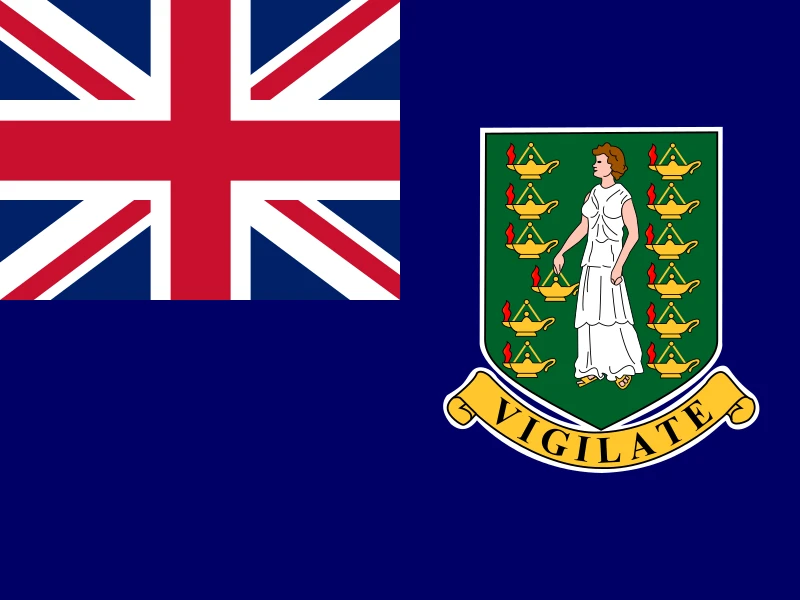
CaribbeanBritish Virgin Islands
Routes
Bank or EMI account
Each suits different activity
Main hurdle
Bank due diligence
Owners, activity and source of funds
Plan
Before you form
Banking should shape the structure
Watch for
Mismatch with your story
Activity must match what you told the bank
The short answer: plan banking first
Forming a BVI company takes little time. Opening an account for it is the step that takes real effort, and it can fail. Banks and payment providers assess the company, its owners, what it will do and where its money comes from. A company with no clear business, an unclear ownership chain or activity in a sensitive sector will find the process hard, whatever the registered agent can offer.
For that reason, decide how the company will bank before you form it, and let that decision shape the structure. The wider picture is in offshore company bank accounts.
A short call with your agent about which banks and providers accept companies like yours can save weeks of wasted applications.
Trust and holding layers add questions. If shares are held through a trust, the bank will want to understand it; see BVI company with a trust.
The two main routes
A BVI company can generally bank in one of two ways. A traditional bank account at a bank, in the BVI or elsewhere, offers the full range of services but the strictest due diligence. An electronic money institution (EMI) or payment account is usually quicker to open and suits receiving and sending payments, though with more limited services and its own risk reviews.
Many companies use both, a bank for the core relationship and an EMI for day-to-day payments. See BVI company bank account and BVI company EMI account for each route, and bank versus EMI for a comparison.
Do not open too many applications at once. Each decline is recorded, and a pattern of them makes the next application harder.
What banks want to see
Whatever the route, the provider is trying to answer the same questions: who are the people behind this company, what will it do, why is it in the BVI, and where does the money come from? Expect to supply identity documents for owners and directors, proof of address, formation documents, a description of the business and evidence for it, such as contracts, invoices or a website.
The ownership picture should match what the agent has recorded. See BVI beneficial ownership. The detailed file is described in BVI bank account documents.
A clear one-page description of the business, who the customers are and how money will flow is often the document that decides the outcome.
Why applications fail
- The business is vague or does not match the company's stated purpose.
- The ownership chain is complex or cannot be explained simply.
- Source of funds or source of wealth is not documented.
- The activity or counterparties sit in a sector or country the provider treats as high risk.
- Documents are incomplete, inconsistent or not recently dated.
An application that fails can leave a mark, as providers may ask whether you have been declined before. See why offshore bank accounts get rejected.
Fix the cause before reapplying. A second application with the same weakness usually fails for the same reason.
Consistency is the simplest defence: the story in the application, the website, the contracts and the agent's file should all say the same thing.
Matching the account to the company
The right account depends on the activity. A consulting or e-commerce company that mainly receives payments from customers may be well served by an EMI account. A holding company that receives dividends may need a bank relationship. A company with significant balances, or one that needs credit or custody, needs a bank.
Economic substance and your home-country reporting also affect banking. Banks may ask whether the company is in scope for economic substance, and US persons must report foreign accounts, covered under FBAR and FATCA.
Reassess the choice whenever the company changes. A company that grows into larger balances or new markets may outgrow an EMI account.
Be realistic about fees and minimums as well. Cost and account terms vary by provider and by how much activity the account will carry, so compare them before you commit.
In this section
Each banking topic has its own page:
- BVI company bank account: how an application works and why it fails.
- BVI company EMI account: payment institutions as an alternative or complement.
- BVI company bank account documents: the file banks and providers ask for.
Banking is only one part of running the company; the uses of a BVI company section shows how banking needs differ by purpose.
Return to the BVI company guide for the full picture, or offshore banking for banking beyond company accounts.
Whichever route you take, keep the company's good standing in order, because providers check it. See BVI company compliance.
See BVI company compliance for the duties that keep the company in good standing, which banks check.
(Review & sourcing)
Written by
Offshore Companies Online
Editorial team
Reviewed by
John Evans
Offshore structuring
Last updated
4 November 2026
General information
Sourced from
BVI legislation and practitioner guidance
Check that the current particulars hold true with a licensed BVI registered agent
01BVI Business Companies Act, 2004 — company law.
02BVI Financial Services Commission — regulator.
(COMMON QUESTIONS)
Common questions people ask about BVI company banking
Yes, but approval depends on the provider's due diligence on the owners, the business and the source of funds. It is not automatic.
It can be. Banks look closely at offshore companies, so a clear business purpose and a documented ownership chain matter more than the BVI registration.
An account with an electronic money institution or payment provider. It is usually easier to open than a bank account and suits payments, though services are more limited.
It depends on the activity. Payment-heavy companies often suit an EMI, while holding companies or companies with large balances usually need a bank. Many use both.
The agent can often introduce you or supply documents, but it does not control the bank's decision.
Identity and address documents for owners and directors, formation documents, a business description with evidence, and source of funds or wealth.
Often yes where you live. US persons may have to report foreign accounts, for example through FBAR. Confirm your own obligations with a qualified adviser.
Common reasons are a vague business, an unclear ownership chain, undocumented funds, a high-risk sector or country, or inconsistent documents.
(MORE ON THE BVI COMPANY)
Further reading and source material on the BVI Company
References
In-depth reference pages on the BVI Company.
1 min
BVI Company Banking
1 min
BVI Company Compliance
1 min
BVI Company Cost
1 min
BVI Company Requirements
1 min
BVI Company Tax
Recent Articles
Commentary and guides covering BVI companies and offshore structuring.

Jurisdiction Guides7 min read
Offshore Company Redomiciliation: Moving a Company Between Jurisdictions

Offshore Companies6 min read
Offshore Trading Companies: Structure, Invoicing and Where to Form One

Offshore Companies6 min read
Closing an Offshore Company: Dissolution, Strike-Off and Winding Up

Offshore Companies6 min read
Who Controls an Offshore Company: Directors, Shareholders and the Registered Agent

Jurisdiction Guides6 min read
Best Offshore Company Jurisdictions in 2026: How to Choose

Jurisdiction Guides5 min read
Offshore Holding Company: How It Works and Where to Form One

Offshore Companies4 min read
Best Offshore Company for E-Commerce Businesses

Jurisdiction Guides5 min read
Offshore Company Costs: What You Pay to Set Up and Maintain One
(CONTACT US)
Speak to a specialist. Let’s build your structure.
Book a confidential, no-obligation consultation with a senior member of our team to discuss your objectives and the services we have available.


