

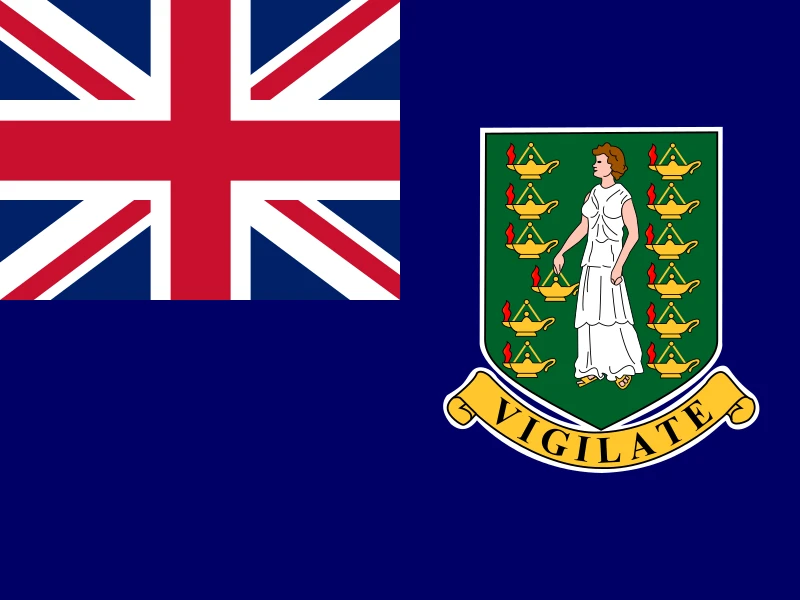
CaribbeanBritish Virgin Islands
BVI style
Offshore, private
Few treaties, light filing
Singapore style
Onshore, operating
Treaties, public register
Local director
Required in Singapore
Not in the BVI
Best for
BVI: holding; SG: operating
Many groups use both
The short answer
Singapore and the BVI sit at opposite ends of the spectrum. Singapore is a high-standing operating jurisdiction with real treaties, real local requirements and a reputation that opens doors. The BVI is a light, private vehicle with few of either. Neither is better in the abstract; they suit different jobs, and many structures use both.
Our own pages cover each: the BVI company and the Singapore company. This page compares them fairly, including where Singapore is clearly the stronger choice. The honest framing is that Singapore is built for companies that do real business there, while the BVI is built for companies whose value lies in what they own or contract, so the two rarely compete head to head for the same job.
Side-by-side comparison
| Factor | BVI | Singapore |
|---|---|---|
| Style | Offshore business company | Onshore operating company |
| Local director | Not required by the company's home law | A resident director is required |
| Tax treaties | Few | Extensive network |
| Public information | Ownership is not on a public register | Company details are on a public register |
| Filings | Light; records kept privately | Annual return and financial statements |
| Banking | Often harder for offshore profiles | Generally easier for real operations |
| Cost | Generally lower | Generally higher |
These are general patterns, not guarantees. Rules and fees change, so confirm the current position with a registered agent or corporate service provider in each place before you commit. A table cannot replace advice on your own facts, but it shows where the questions are.
Substance, directors and filings
The most visible difference is that Singapore expects a real local footprint. A Singapore company needs a resident director, a registered address and a local presence for its filings, and it prepares financial statements. That cost buys credibility, because counterparties can check the company on a public register and see that it operates under a serious regulatory framework.
A BVI company needs a registered agent and registered office but no local operating presence, and it keeps its records privately. The trade-off is that the BVI applies the Economic Substance (Companies and Limited Partnerships) Act, 2018 to defined activities, so a BVI company carrying on such an activity may still need genuine substance. See BVI economic substance and the wider economic substance overview.
Tax treaties and reputation
Singapore's treaty network is its strongest practical advantage. Where a business needs relief from withholding tax on cross-border payments or wants to show that income is taxed under a recognised regime, a Singapore company can often do what a BVI company cannot. Its standing with banks, regulators and large counterparties is also high.
The BVI offers few treaty benefits, so it tends to be chosen where treaty relief is not the point: holding shares, receiving distributions, acting as a special-purpose vehicle or contracting in a neutral jurisdiction. Do not assume either company reduces tax. The result depends on the owner's residence, where the company is managed and where profits arise, and you should confirm it with an adviser. See BVI company tax.
When each fits better
The BVI fits better when:
- you want a simple holding or special-purpose company
- you have no need for treaty relief or a local presence
- low administration matters more than market standing
Singapore fits better when:
- you run, or plan to run, a real business in Asia
- you need treaty access or a respected counterparty
- you can meet the resident director and filing duties
Banking follows the same pattern, and it is often the deciding factor in practice. Operating businesses with a Singapore base tend to find it easier, while a BVI company usually faces closer questions. See the BVI company bank account guide for what banks ask.
Using both together
Groups sometimes put a BVI holding company above a Singapore operating company, so the business operates where it is accepted and ownership sits in a simpler vehicle. That works only if tax is checked in every country involved, including how dividends are treated, where the holding company is managed and what the owner's home country says about foreign companies.
This is a layering choice, not a creditor-protection strategy, and it adds an entity to maintain. A BVI company is not a creditor-protection tool on its own; if that is a goal, look at a Cook Islands trust. For the holding role in more detail, see BVI holding company, and compare with BVI company vs Hong Kong company.
How to decide
- Decide whether the company will operate or only hold.
- Ask whether you need treaty relief, and for which payments, since treaty access is Singapore's main edge.
- Check whether you can meet Singapore's director and filing duties.
- Ask your intended bank which jurisdictions it prefers, and what it would need to see.
- Compare annual costs, not just formation, and check your home-country tax rules on foreign companies.
If you are still comparing offshore options, read choosing a jurisdiction and BVI company vs Cayman company. Write down your reasons for the choice, since a bank or tax authority may ask. Costs on the BVI side are explained in BVI company cost.
See BVI company for the overview and BVI company uses for the roles it plays best.
(Review & sourcing)
Written by
Offshore Companies Online
Editorial team
Reviewed by
John Evans
Offshore structuring
Last updated
4 November 2026
General information
Sourced from
BVI legislation and practitioner guidance
Check that the current particulars hold true with a licensed BVI registered agent
01BVI Business Companies Act, 2004 — BVI company law.
02Economic Substance (Companies and Limited Partnerships) Act, 2018 — BVI substance rules.
03Accounting and Corporate Regulatory Authority — Singapore registry.
(COMMON QUESTIONS)
Common questions people ask about BVI and Singapore companies
Neither in the abstract. The BVI suits simple holding and special-purpose roles, while Singapore suits real operating businesses that need treaties, local standing and easier banking.
Yes, a Singapore company is required to have a resident director. A BVI company has no equivalent requirement but does need a registered agent and registered office.
Yes. Singapore has an extensive treaty network, whereas the BVI has few. Treaty relief is often the main reason to choose Singapore.
Generally yes, because Singapore requires local directors, filings and services. Compare annual running cost as well as formation, and confirm current fees.
Singapore is generally easier for a business with real operations. A BVI company can bank but usually faces closer questions about purpose and source of funds.
BVI ownership is not on a public register, while Singapore company details are on a public register. Authorities can still obtain ownership information in both places.
Yes, a BVI holding company above a Singapore operating company is a common pattern. Check tax in every country involved, including dividends and place of management.
Yes, the Economic Substance (Companies and Limited Partnerships) Act, 2018 applies to defined relevant activities. Ask your registered agent whether your activity is in scope.
(MORE ON THE BVI COMPANY)
Further reading and source material on the BVI Company
References
In-depth reference pages on the BVI Company.
1 min
BVI Company Banking
1 min
BVI Company Compliance
1 min
BVI Company Cost
1 min
BVI Company Requirements
1 min
BVI Company Tax
Recent Articles
Commentary and guides covering BVI companies and offshore structuring.

Jurisdiction Guides7 min read
Offshore Company Redomiciliation: Moving a Company Between Jurisdictions

Offshore Companies6 min read
Offshore Trading Companies: Structure, Invoicing and Where to Form One

Offshore Companies6 min read
Closing an Offshore Company: Dissolution, Strike-Off and Winding Up

Offshore Companies6 min read
Who Controls an Offshore Company: Directors, Shareholders and the Registered Agent

Jurisdiction Guides6 min read
Best Offshore Company Jurisdictions in 2026: How to Choose

Jurisdiction Guides5 min read
Offshore Holding Company: How It Works and Where to Form One

Offshore Companies4 min read
Best Offshore Company for E-Commerce Businesses

Jurisdiction Guides5 min read
Offshore Company Costs: What You Pay to Set Up and Maintain One
(CONTACT US)
Speak to a specialist. Let’s build your structure.
Book a confidential, no-obligation consultation with a senior member of our team to discuss your objectives and the services we have available.