
(REFERENCE · BVI BANKING · 6 MIN READ)
BVI Company Bank Account
A BVI company can hold a bank account, but no bank is obliged to open one. This page explains what banks ask, how an application runs, why BVI applications are declined and how to prepare a file that gets a decision.

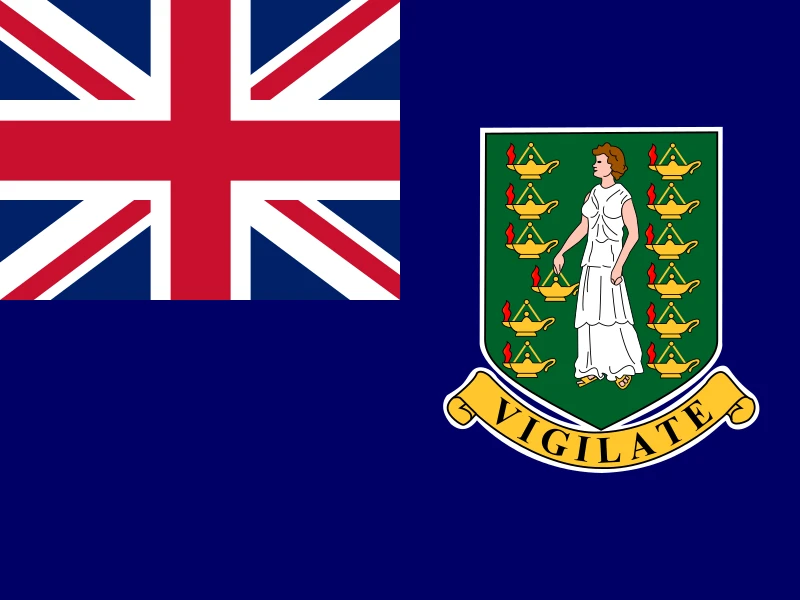
CaribbeanBritish Virgin Islands
Governing law
BVI Business Companies Act, 2004
Gives the company capacity to hold accounts
Bank's decision
Discretionary
No right to an account; each bank sets its own policy
Core test
Clear business, traceable funds
Purpose, ownership and source of money
Watch
Inconsistent paperwork
Mismatched names or stories stall applications
Can a BVI company open a bank account?
Yes, but there is no automatic right to one. The BVI Business Companies Act, 2004 gives the company legal capacity to hold property and open accounts, yet no bank is required to accept it. Each bank applies its own appetite for risk, and many look harder at structures registered offshore than at domestic ones.
That makes banking a planning question, not an afterthought. The applications that succeed arrive with a plain business story, an ownership chain the bank can follow and a complete, consistent file. The ones that fail usually fail on the file, not on the company. Read the BVI company requirements first so the company documents are already in order, and see the general guide to offshore company bank accounts for how banks think across jurisdictions.
What a bank wants to understand
Whatever the bank and whichever country it sits in, the questions are broadly the same. Your answers should be short, specific and identical in every document you submit.
- What the company does, in plain terms, with real customers, suppliers and contracts rather than a long list of permitted activities.
- Who owns and controls it, traced up to the individuals behind every layer, including any trust or nominee arrangement.
- Where the money comes from, both the opening deposit and the flows you expect afterwards.
- Why this bank and this country, and how the account will actually be used.
Banks also ask for expected activity: the countries, currencies and typical size of payments. Prepare those estimates honestly, because they are compared with what actually happens once the account is live.
A bank that cannot answer one of these questions from the file will not guess. It will ask again, then decline.
How the application runs
- Decide the business model. Settle what the company will do and with whom before you choose a bank.
- Gather the company documents. Your registered agent supplies these; see BVI registered agent.
- Assemble the personal and financial evidence. The full list is on BVI company bank account documents.
- Submit and answer follow-ups. Expect a compliance review and questions, sometimes a video or in-person meeting with the people behind the company.
- Fund and activate. Opening usually follows approval, and the first deposit and early activity are often reviewed closely.
Timing depends on the bank, your nationality and residence, the sector and how complete the file is, so treat any promised speed with caution. Keep a record of every question asked and every answer given, because later requests are compared against earlier ones.
Why BVI applications are declined
Most refusals trace back to a short list of causes, and nearly all are avoidable.
- A vague or very broad business purpose that tells the bank nothing about real activity.
- Ownership the bank cannot follow, or controllers who are not disclosed clearly.
- Funds it cannot trace, or source-of-wealth evidence that does not match the story.
- Activity in a sector or country the bank avoids, which is a policy decision rather than a verdict on you.
- No genuine link between the owners, the business and the bank's market.
- Missing economic activity where the structure looks like a shell; see economic substance for how that question is framed.
Our article on why offshore company bank accounts get rejected goes through these in more detail.
Bank account or EMI account
When a bank account is slow to obtain, some owners use an electronic money institution for part of their flows. It is a different product, not a lesser version of a bank, and the choice depends on what you need to do.
| Factor | Bank account | EMI account |
|---|---|---|
| Opening process | Detailed review, often slower | More digital, often quicker |
| Funds protection | Deposit protection may apply, depending on the bank | Usually safeguarded rather than insured |
| Services | Lending, wide foreign exchange, custody | Payments, cards, multi-currency balances |
| Acceptance by others | Widely accepted | Varies by counterparty |
See BVI company EMI account and the article on bank vs EMI for an offshore company.
How to improve your chances
- Choose a bank that serves your sector and your country of residence, rather than approaching banks at random.
- Prepare the whole file before you apply and submit it together, not in pieces.
- Write the business description once and reuse it word for word.
- Make sure names, addresses and dates match across every document.
- Be ready to explain any trust, nominee or intermediate holding company above the BVI company.
Remember what the account is for. A BVI company is not a creditor-protection tool on its own, and an account in its name does not change that. If protection from future claims is your aim, look at the Cook Islands trust and how a company sits beneath one on the BVI company with a trust page. For the wider picture, return to the BVI company guide.
See BVI company bank account documents for the full checklist and BVI company EMI account for payment-account alternatives.
(Review & sourcing)
Written by
Offshore Companies Online
Editorial team
Reviewed by
John Evans
Offshore structuring
Last updated
4 November 2026
General information
Sourced from
BVI legislation and practitioner guidance
Check that the current particulars hold true with a licensed BVI registered agent
01BVI Business Companies Act, 2004 — company law.
02Your registered agent's account-opening guidance — company documents.
(COMMON QUESTIONS)
Common questions people ask about a BVI company bank account
Yes, but no bank has to accept it. Each bank decides on its own risk policy, and approval depends on a clear business purpose, traceable ownership and a complete file.
It can apply to banks in the BVI or elsewhere. Many owners bank abroad because they want a bank in the market where their customers or suppliers are, but each bank sets its own conditions.
Common reasons are a vague business purpose, ownership the bank cannot follow, untraceable funds, a sector or country the bank avoids, and no genuine link to the bank's market.
Banks want to see a real purpose with customers, suppliers or contracts behind it. A company with no visible activity looks like a shell and is harder to bank.
No. The bank needs the formed company and its documents. You can, and should, plan the banking and choose the bank before you form.
It depends on the bank. Some accept certified documents and a video call, while others want a meeting. Ask the bank at the start so it does not hold up the process.
It can cover payments, cards and multi-currency balances, but it is not a bank and does not offer the same protection or services. Many companies use one alongside a bank account.
No. A BVI company is not a creditor-protection tool on its own, and a bank account in its name does not change that. Protection planning uses structures such as an offshore trust.
(MORE ON THE BVI COMPANY)
Further reading and source material on the BVI Company
References
In-depth reference pages on the BVI Company.
1 min
BVI Company Banking
1 min
BVI Company Compliance
1 min
BVI Company Cost
1 min
BVI Company Requirements
1 min
BVI Company Tax
Recent Articles
Commentary and guides covering BVI companies and offshore structuring.

Jurisdiction Guides7 min read
Offshore Company Redomiciliation: Moving a Company Between Jurisdictions

Offshore Companies6 min read
Offshore Trading Companies: Structure, Invoicing and Where to Form One

Offshore Companies6 min read
Closing an Offshore Company: Dissolution, Strike-Off and Winding Up

Offshore Companies6 min read
Who Controls an Offshore Company: Directors, Shareholders and the Registered Agent

Jurisdiction Guides6 min read
Best Offshore Company Jurisdictions in 2026: How to Choose

Jurisdiction Guides5 min read
Offshore Holding Company: How It Works and Where to Form One

Offshore Companies4 min read
Best Offshore Company for E-Commerce Businesses

Jurisdiction Guides5 min read
Offshore Company Costs: What You Pay to Set Up and Maintain One
(CONTACT US)
Speak to a specialist. Let’s build your structure.
Book a confidential, no-obligation consultation with a senior member of our team to discuss your objectives and the services we have available.


