

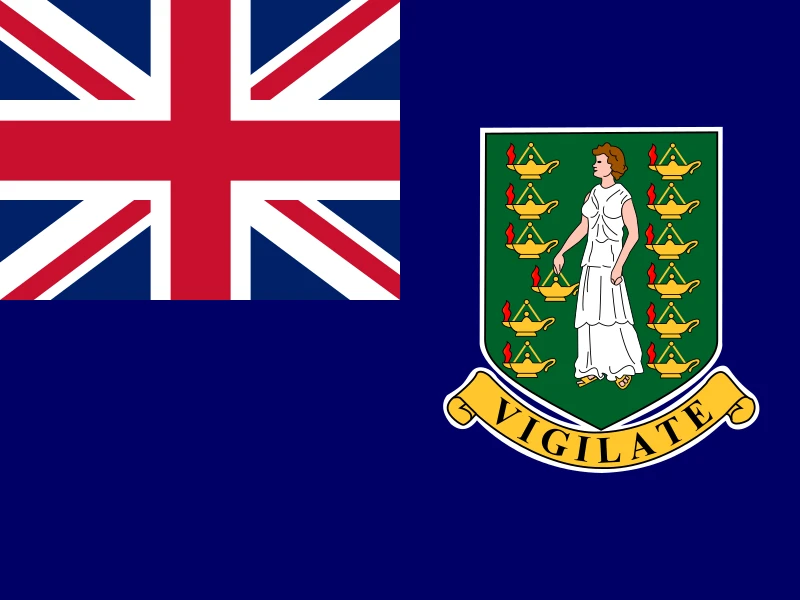
CaribbeanBritish Virgin Islands
BVI style
Private offshore company
Light filing, no public owners
Hong Kong style
Operating company
Public record, audited accounts
Tax basis
HK is territorial
Source of profit decides
Banking
HK easier if operating
BVI faces closer questions
The short answer
The BVI and Hong Kong are often shortlisted together for international trading and holding, but they solve different problems. The BVI is a light-touch private offshore company. Hong Kong is an operating-company jurisdiction with real commercial standing, particularly for Asia-facing business. The choice usually comes down to whether you value low maintenance or market acceptance.
Our own pages cover each in turn: the BVI company and the Hong Kong company. This page compares them fairly, including the areas where Hong Kong is simply the better tool. Many people discover that the real question is not offshore versus onshore at all, but whether their customers, bank and tax position need a company that looks and behaves like a local operating business.
Side-by-side comparison
| Factor | BVI | Hong Kong |
|---|---|---|
| Style | Offshore business company | Operating company with a local base |
| Ownership privacy | Directors and shareholders are not on a public register | Director and filing information is publicly searchable |
| Accounts and filings | No public filing; records must be kept | Annual return and financial statements are required |
| Local presence | Registered agent and registered office | Registered office and a local company secretary |
| Tax approach | Depends on owner and activity; not a tax-free promise | Territorial: depends on whether profit has a Hong Kong source |
| Banking | Often harder for offshore profiles | Generally easier for businesses with real activity |
| Running cost | Generally lower | Generally higher, with audit and local services |
These are general patterns, not guarantees. Rules, fees and bank appetite change, so confirm the current position with a registered agent in each place before you commit. Remember that a row favouring one side may not matter for your use, so weigh the rows that match what the company will actually do.
Tax, accounts and privacy
Hong Kong taxes on a territorial basis, so the question is whether profit has a Hong Kong source, which depends on where the activity that earns it takes place. A Hong Kong company with genuine operations may be well placed; one that is a thin wrapper around activity elsewhere needs advice. The BVI does not tax in the same operating way, but that is not the end of the analysis, because the owner's home country and the place of management still matter.
On filings, Hong Kong expects annual returns and financial statements, and director details are searchable. A BVI company keeps its records privately, though its ownership information is still held for authorities under rules such as the BOSS Act, 2017. See BVI beneficial ownership.
Banking and commercial acceptance
This is where Hong Kong usually wins for operating businesses. A company with a local presence, real customers and a verifiable trading record is generally easier to present to a bank, a payment provider or a mainland-facing counterparty. Suppliers and platforms in Asia often expect a company they can check on a public register.
BVI companies can bank, but applications from offshore profiles face closer questions about substance, source of funds and purpose. That does not rule the BVI out for a holding or special-purpose role, where the bank is looking at a different risk. Read the BVI company bank account guide and the offshore bank accounts overview, and ask your intended bank which jurisdictions it prefers.
When each fits better
The BVI fits better when:
- you want a low-maintenance holding or special-purpose company
- privacy of the public record matters and you do not need a local operating presence
- costs need to stay low and the structure is not customer-facing
Hong Kong fits better when:
- you trade with mainland China or elsewhere in Asia and want a recognised counterparty
- you need a bank or payment account for a real operating business
- suppliers, customers or platforms expect a company with verifiable standing
Running costs follow the same split: Hong Kong carries audit and local service costs that a BVI company does not, so compare annual cost, not only formation. See BVI company cost.
Using both together
Some groups put a BVI holding company above a Hong Kong operating company, so commercial work happens where it is accepted and ownership sits in a simpler vehicle. It is a common pattern, but it only works if the tax position is checked in every country involved, including dividend flows, management and control, and the owner's home rules.
The BVI layer is not a shield from creditors on its own; if asset protection is part of the plan, compare Cook Islands trust structures, and see how a trust can sit above a BVI company in BVI company with a trust. For the holding role itself, read BVI holding company.
How to decide
- Decide whether the company will trade or only hold.
- Ask the bank you plan to use which jurisdictions it prefers.
- Compare annual costs including audit and local services, not just formation.
- Check the owner's home-country tax rules on foreign companies.
- Confirm substance duties in each jurisdiction with the relevant agent.
- Choose the simplest structure that does the job, and add layers only for a stated reason.
Record your reasons for the choice, because a bank or tax authority may later ask why the company sits where it does. For the BVI's position against another leading jurisdiction, see BVI company vs Cayman company and BVI company vs Singapore company. A general method for any jurisdiction is in choosing a jurisdiction.
See BVI company for the overview and BVI trading company for how trading structures run.
(Review & sourcing)
Written by
Offshore Companies Online
Editorial team
Reviewed by
John Evans
Offshore structuring
Last updated
4 November 2026
General information
Sourced from
BVI legislation and practitioner guidance
Check that the current particulars hold true with a licensed BVI registered agent
01BVI Business Companies Act, 2004 — BVI company law.
02Beneficial Ownership Secure Search System (BOSS) Act, 2017 — ownership records.
03Hong Kong Companies Registry — local registry.
(COMMON QUESTIONS)
Common questions people ask about BVI and Hong Kong companies
Neither in the abstract. The BVI suits low-maintenance holding and private structures, while Hong Kong suits operating businesses that need commercial standing and easier banking in Asia.
Neither should be called tax-free. Hong Kong taxes on a territorial basis, so tax depends on whether profit has a Hong Kong source, and the owner's home country may tax too. Confirm your position with an adviser.
Generally yes. Hong Kong expects an annual return and financial statements, and a BVI company keeps its records privately instead. Confirm the current requirements with an agent.
Hong Kong is generally easier for a business with real activity, customers and suppliers. A BVI company can bank but usually faces closer questions about purpose, substance and source of funds.
Generally yes, because Hong Kong carries audit and local service costs. Compare annual running cost as well as formation, and confirm current fees.
Yes, groups often do this. It only works if tax is checked in every country involved, including dividends, management and control, and the owner's residence.
The BVI keeps directors and shareholders off a public register, whereas Hong Kong director and filing information is searchable. Authorities can still obtain ownership information under BVI beneficial ownership rules.
A BVI company needs a registered agent and registered office. A Hong Kong company needs a registered office and a local company secretary.
(MORE ON THE BVI COMPANY)
Further reading and source material on the BVI Company
References
In-depth reference pages on the BVI Company.
1 min
BVI Company Banking
1 min
BVI Company Compliance
1 min
BVI Company Cost
1 min
BVI Company Requirements
1 min
BVI Company Tax
Recent Articles
Commentary and guides covering BVI companies and offshore structuring.

Jurisdiction Guides7 min read
Offshore Company Redomiciliation: Moving a Company Between Jurisdictions

Offshore Companies6 min read
Offshore Trading Companies: Structure, Invoicing and Where to Form One

Offshore Companies6 min read
Closing an Offshore Company: Dissolution, Strike-Off and Winding Up

Offshore Companies6 min read
Who Controls an Offshore Company: Directors, Shareholders and the Registered Agent

Jurisdiction Guides6 min read
Best Offshore Company Jurisdictions in 2026: How to Choose

Jurisdiction Guides5 min read
Offshore Holding Company: How It Works and Where to Form One

Offshore Companies4 min read
Best Offshore Company for E-Commerce Businesses

Jurisdiction Guides5 min read
Offshore Company Costs: What You Pay to Set Up and Maintain One
(CONTACT US)
Speak to a specialist. Let’s build your structure.
Book a confidential, no-obligation consultation with a senior member of our team to discuss your objectives and the services we have available.